
Why we started the Post
My family and I were having dinner with friends in Hammonds Plains when the subject of the Post came up. We shared the October issue, and our hosts’ attention fell on the map of the Pleasant-Woodside neighbourhood.
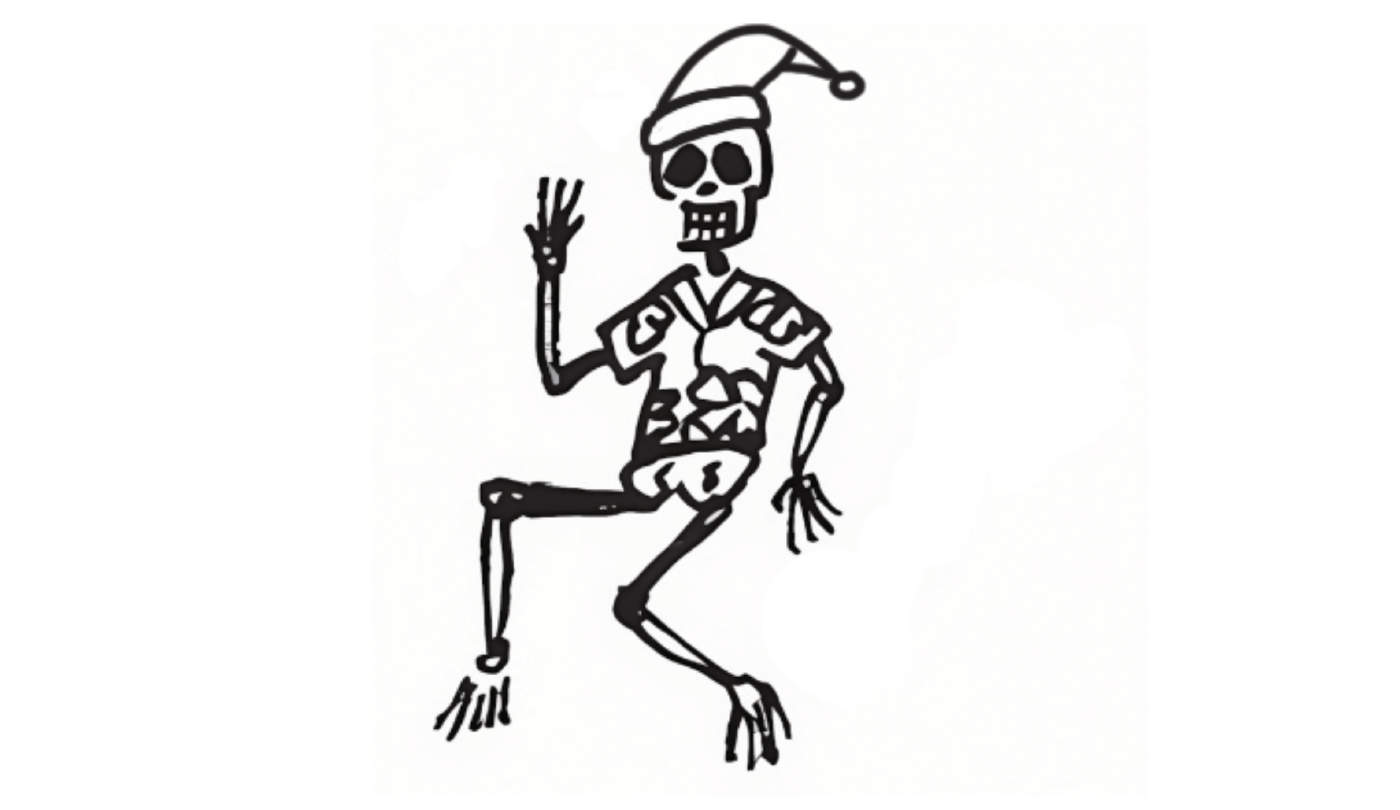
“Wait, why is there a skeleton on the map?”
Their question caught me unawares. We all know Harry, right? “It’s our neighbourhood skeleton,” I answered naturally. As more bemused questions followed, I quietly wondered: Have these suburban folks never heard of a year-round neighbourhood meme skeleton?
Location matters. What happens here helps define our lives. From development projects bringing hundreds of new residents, to a punk show at the tavern, to the people who help our kids get to school safely, the events and people (and skeletons) around us make our community. However long you’ve been here, whatever your politics and passions, you live here. Like me.
The Pleasant-Woodside Neighbourhood Association started the Post to push back on a long, slow trend: the collapse of local journalism across Canada, including in our area. When local news disappears, we’re left in the dark about our own streets. But where it survives, communities feel more like, well, communities. Births are celebrated, deaths are mourned, new businesses get a crowd, and elected officials are praised or critiqued as needed. Local journalism doesn’t make everyone happy (if it does, you’re doing it wrong), but it keeps people informed about their backyards.
Most places, though, have lost that anchor, and life has grown less neighbourly. Social media’s promise of building community hasn’t materialized. Instead, big tech has reduced many community conversations to the abstract, ideological fights that seem to thrive in these spaces. None of this helps us to get to know our neighbours. And despite efforts to curate our feeds to catch local news (if it’s even allowed on the platform), we’re still fighting algorithms and business models where outrage keeps our attention and our attention (and personal information) is the commodity, the product.
At the same time, most of our old local news has disappeared, or been reduced to a husk now owned by distant corporate interests that are more concerned with shareholder profits than our communities’ public good. Of course, there are still good journalists doing good work, but with so few staff, major outlets can only chase stories with big, bleak impact; crime, crisis, controversy, and catastrophe.You’re not alone if you feel like the news that makes it to us is rarely local and often just a cynical flood of upsetting events making everything feel worse.
The Post exists to strain out this cynicism and embrace the small. We’re all volunteers with families and jobs and businesses, but we love our area. We want to help the neighbourhood understand itself, to connect people around community events and shared interests, and to equip us to talk about life here with our own words, art, and ideas. This is our mission, and anyone who lives, works, or studies here can join in. The pay ain’t great, but the payoff feels pretty good.
That payoff is the chance to reclaim these eroding rights: to understand the things that are happening to us and to our neighbourhood; to enjoy our lives as much as we can; and to speak up when it matters. The Post aims to help with these. And we’re glad you’re on this journey with us.
–
The Post will hold its next editorial meeting on Thursday, Jan. 8, at 6:00 p.m. at the Woodside Tavern. All are welcome to join in and participate.